
GDPR Compliant UTM Tracking That Actually Works
GDPR doesn't ban UTM tracking. But doing it wrong can cost you fines. Learn how to track attribution legally.
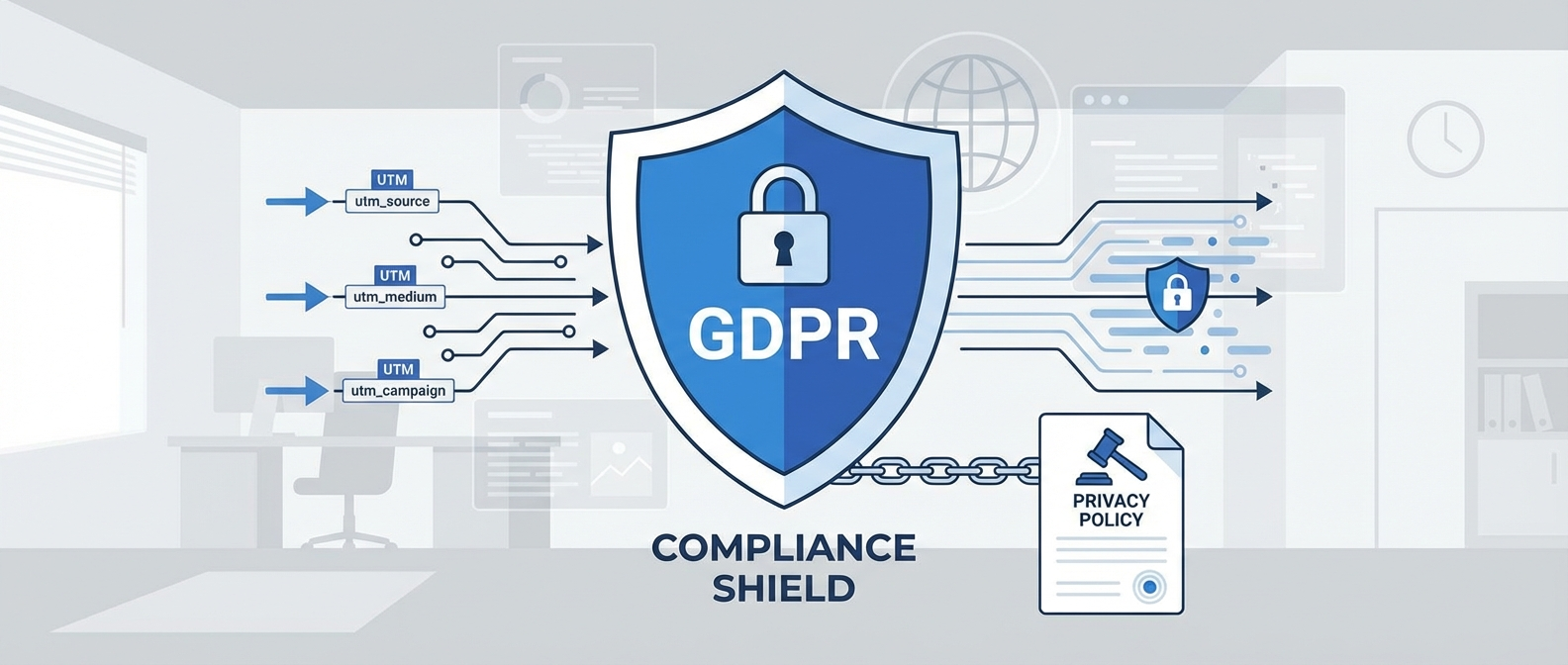
If this sounds familiar
- You're not sure if UTM parameters are personal data under GDPR
- Cookie consent popups block your tracking
- Legal counsel gave vague advice about UTM compliance
- You're afraid of €20M fines for getting it wrong
- Your tracking breaks when users decline consent
You're either over-complying or under-complying. Neither is good.
What GDPR Actually Requires for UTM
1. UTM Parameters and Personal Data
UTM parameters themselves aren't personal data. But when combined with cookies, IP addresses, or user accounts, they become identifiable. The key is consent and transparency.
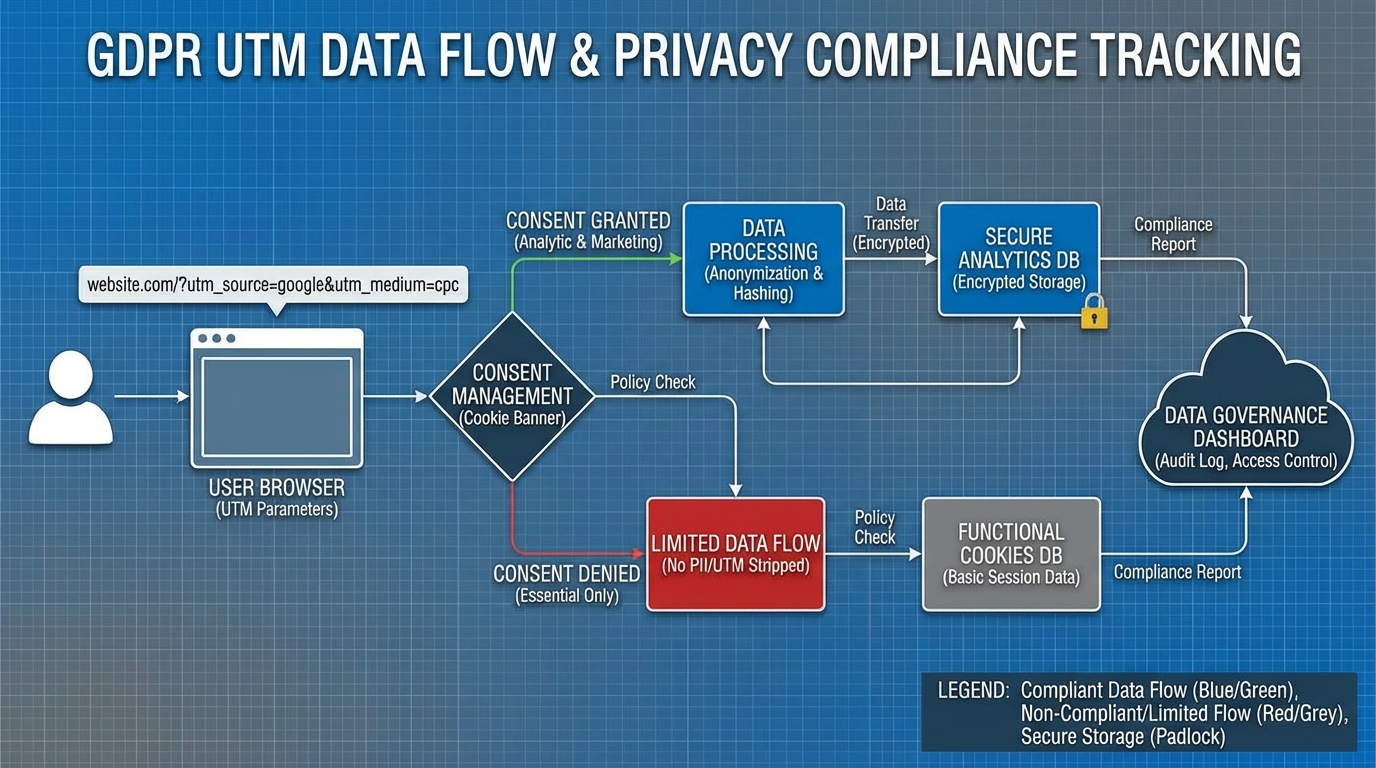
2. Consent Mode and First-Party Storage
Google's Consent Mode allows tracking while respecting user choices. First-party UTM storage doesn't require explicit consent in most jurisdictions.
3. Data Retention Limits
GDPR requires you to define retention periods. Set UTM data to auto-expire after 6-12 months. This is both compliant and good for data hygiene.
4. Third-Party Processors
Sending UTM data to Google Analytics, Facebook, or other tools makes them processors. You need proper DPA agreements and transparency in your privacy policy.
The Cost of Non-Compliance
- €20M potential fine per violation
- Loss of Google Analytics data
- Mandatory breach notifications
- Reputational damage with customers
- Website blocking in EU countries
GDPR fines can reach €20M or 4% of global revenue.
What Good Looks Like
- Transparent privacy policy explaining UTM tracking
- Cookie consent that allows essential tracking
- Data retention policies that auto-expire old parameters
- DPA agreements with all analytics providers
- No tracking data shared without consent
Full UTM attribution with complete GDPR compliance.
Why Blocking All Tracking Is Not the Answer
This is exactly why we built UTM Grabber
UTM Grabber provides GDPR-compliant first-party tracking that works within consent frameworks.
- First-party UTM storage (often exempt from consent)
- Consent Mode compatible
- Data retention controls built-in
- No third-party data sharing without consent
- Compliant with GDPR, CCPA, and ePrivacy
Who this is for
- E-commerce stores with EU customers
- SaaS companies with European users
- Marketing teams running EU campaigns
- Agencies managing client compliance
- Any business wanting to avoid GDPR fines
Any business targeting EU customers that needs UTM tracking.