
FBCLID Tracking Documentation That Survives Real-World Traffic Paths
Document exactly where FBCLID is captured, where it can be stripped, and how it maps to useful reporting fields.

If this sounds familiar
- FBCLID appears on landing URLs but not in lead records.
- Redirects and link-processing tools remove click IDs unexpectedly.
- Teams treat FBCLID as a reporting dimension instead of a diagnostic identifier.
- Compliance concerns block deployment because retention rules are undefined.
- Paid social teams cannot reconcile platform conversions with CRM outcomes.
These are fixable implementation issues, not random analytics noise.
A practical FBCLID policy + implementation model
What FBCLID is for (and not for)
Use fbclid primarily for diagnostics and click-level join logic, not as your campaign grouping field.
Where to capture
Capture at first server-visible request (or earliest allowed point), then keep campaign tags (utm_campaign, etc.) in separate reporting fields.
Documentation snippet your team can adopt
- Capture point: landing request
- Storage:
raw_click_id_fb - Retention: short diagnostic window
- Reporting field:
attribution_campaign(from UTM)
Failure triage order
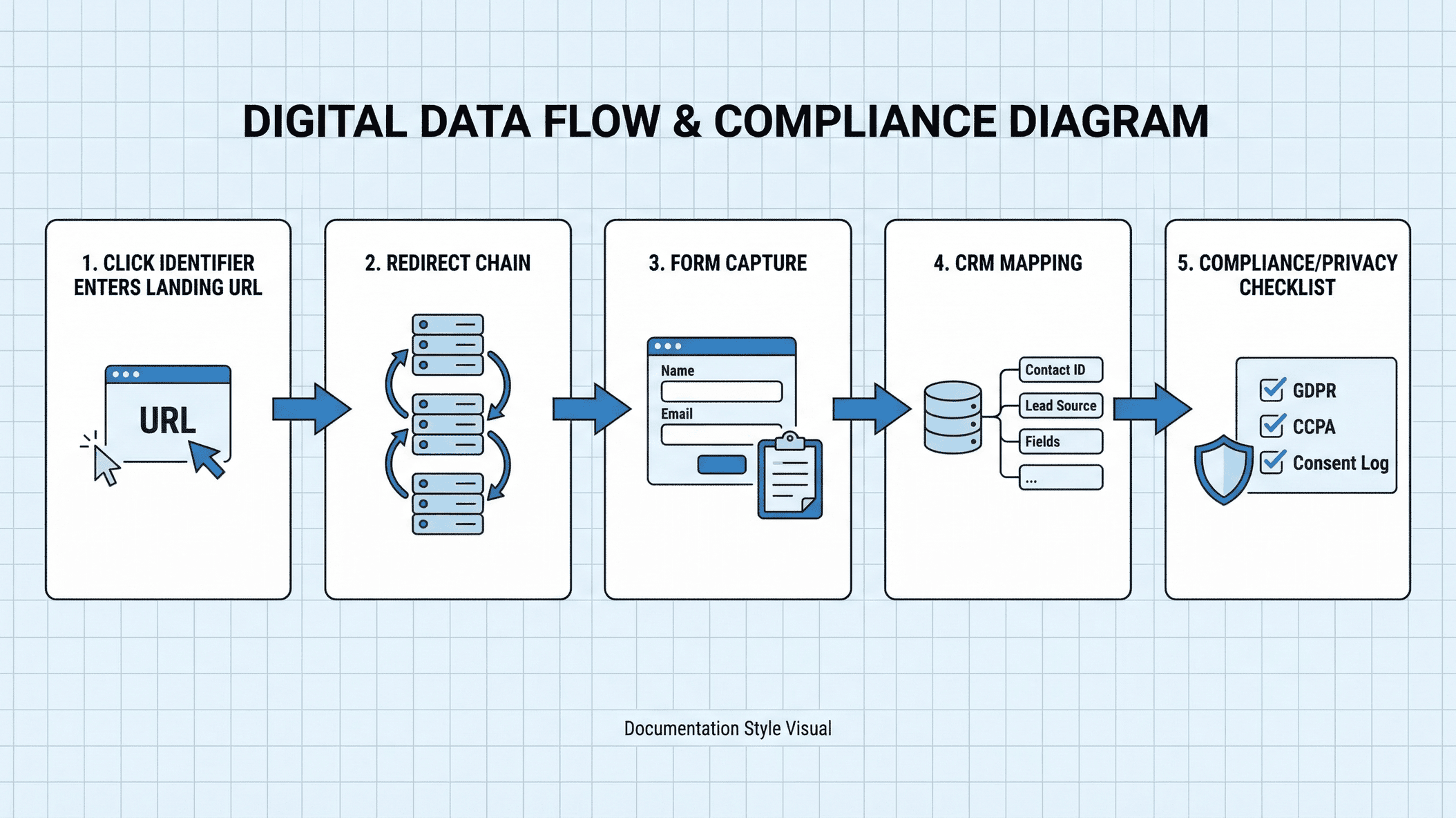
- Landing URL has fbclid?
- Post-redirect URL still has fbclid?
- Form payload has fbclid?
- CRM record has
raw_click_id_fb?
Related reading:
- Facebook Ads UTM Tracking - UTM Grabber
- GDPR Compliant UTM Tracking - UTM Grabber
- Why Attribution Breaks - UTM Grabber
What this costs when left unresolved
- Ad spend optimization slows because click-level debugging is impossible.
- Compliance reviews become blockers instead of guardrails.
- Attribution disputes between teams become recurring fire drills.
Without clear fbclid policy, teams either over-collect risky data or under-collect critical diagnostics.
What good looks like in practice
- FBCLID is captured where possible and used for diagnostics only.
- Campaign analysis relies on stable UTM dimensions.
- Retention and consent rules are documented and enforceable.
When source data is stable, optimization speed improves immediately.
Why this stays broken for many teams
This is exactly why we built UTM Grabber
UTM Grabber keeps click metadata and campaign metadata separated so reporting stays useful and compliant.
- Reliable first-hop capture design.
- Clear split between diagnostic IDs and reporting dimensions.
- Consent-aware field handling guidance.
Who this implementation is for
- Paid social teams needing conversion diagnostics.
- Ops teams responsible for attribution schema.
- Compliance-conscious organizations.
If attribution quality affects how you allocate budget, this is the right workflow.
What real users are saying
/#schedule-demo Reduce ad-reporting disputes quickly.