
Elementor Hidden Field UTM Tracking Without Silent Field Failures
Hidden fields are only reliable when parameter keys, field IDs, and webhook mappings stay synchronized.

If this sounds familiar
- Hidden fields look configured but entries still save empty source values.
- Template duplication changed field IDs and broke downstream mappings.
- Some campaigns use inconsistent parameter casing.
- UTM values appear in notification emails but not in CRM records.
- Attribution QA depends on manual spot checks that miss regressions.
These are fixable implementation issues, not random analytics noise.
Hidden-field reliability playbook for Elementor teams
Start with runtime HTML, not the builder UI
Check hidden input values in rendered page source right before submit.
Prevent field-ID drift
When duplicating forms/templates, re-validate webhook mapping IDs immediately.
Keep a tiny schema contract
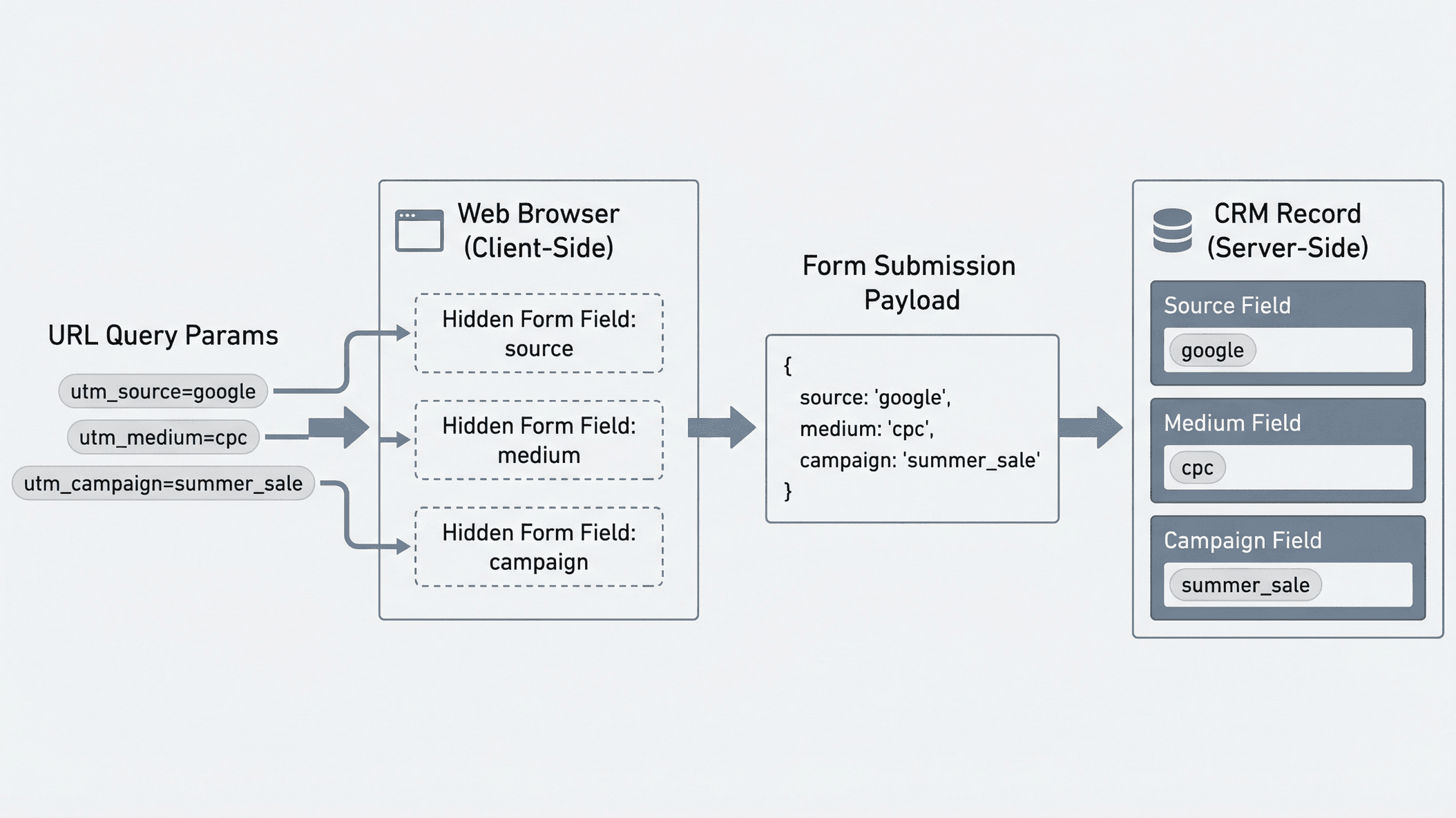
Use the same keys across every form:
sourcemediumcampaign
Map URL params into those keys once, then map those keys downstream.
Recovery checklist when data goes blank
- Confirm tagged URL keys match dynamic-tag keys exactly.
- Re-test with cache/CDN disabled.
- Validate submit payload and webhook payload side by side.
- Rebind mapping after template duplication.
Related reading:
- Elementor Form Conversion Tracking - UTM Grabber
- Why Your Google Analytics UTM Data Is Wrong - UTM Grabber
- UTM Tracking Best Practices - UTM Grabber
What this costs when left unresolved
- Lead-source confidence drops and sales feedback loops slow down.
- Campaign prioritization gets biased toward channels with cleaner tagging.
- Reporting time is spent cleaning fields instead of finding growth opportunities.
Most failures happen between renderer and payload, not inside analytics.
What good looks like in practice
- Hidden values are visible pre-submit and preserved post-submit.
- Mapping survives template changes and new landing-page variants.
- Attribution QA is reproducible by any team member.
When source data is stable, optimization speed improves immediately.
Why this stays broken for many teams
This is exactly why we built UTM Grabber
UTM Grabber enforces stable hidden-field schema and protects mappings across Elementor changes.
- Centralized field naming and mapping conventions.
- Resilient capture under common WordPress optimization stacks.
- Fast debug workflow for payload-level issues.
Who this implementation is for
- WordPress teams using Elementor for paid landing pages.
- RevOps owners of CRM property hygiene.
- Agencies shipping many template variants.
If attribution quality affects how you allocate budget, this is the right workflow.
What real users are saying
/#schedule-demo Start with one high-traffic form.